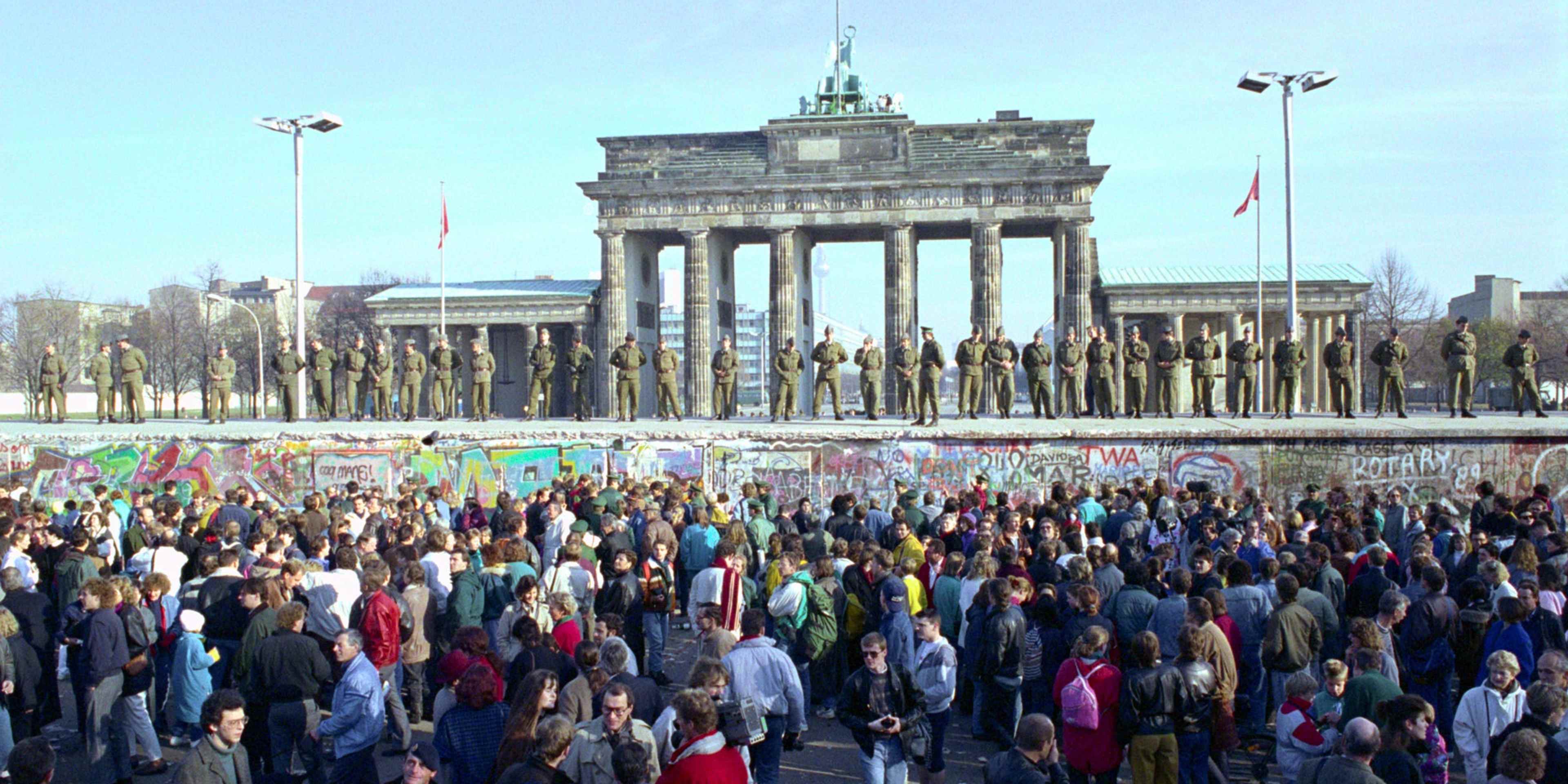
El Muro de Berlín fue mucho más que un muro. Durante 28 años, 2 meses y 27 días dividió familias, separó una ciudad y simbolizó ante el mundo entero la fractura entre dos sistemas políticos irreconciliables. Hoy, caminando por Berlín, es difícil imaginar que donde ahora hay parques, cafeterías y avenidas, existió una franja de muerte de 155 kilómetros de largo.
El contexto: ¿por qué se construyó el Muro?
Para entender el Muro hay que entender la Berlín de los años 50. Tras la Segunda Guerra Mundial, la ciudad quedó dividida en cuatro sectores controlados por las potencias aliadas: Estados Unidos, Reino Unido, Francia y la Unión Soviética. Las tres primeras zonas formaron Berlín Occidental, ligada a la República Federal Alemana (RFA). El sector soviético se convirtió en Berlín Oriental, capital de la República Democrática Alemana (RDA).
El problema para el régimen comunista de la RDA era la hemorragia de población. Entre 1949 y 1961, más de 3,5 millones de personas cruzaron de Este a Oeste, la mayoría jóvenes cualificados. Solo en 1961, 207.000 personas abandonaron la RDA. Para la economía del régimen, era insostenible.
La solución llegó en la madrugada del 13 de agosto de 1961. El líder de la RDA, Walter Ulbricht, con la aprobación de Moscú, dio la orden: cerrar la frontera esa misma noche.
La noche del 13 de agosto de 1961
Los berlineses se despertaron con el sonido de camiones y soldados. En pocas horas, el alambre de espino recorría ya la ciudad. Las calles que antes cruzaban libremente fueron cortadas. Los vecinos de Bernauer Strasse amanecieron con soldados apostados frente a sus puertas: su casa quedaba en el Este, pero la acera, en el Oeste.
Aquel primer día hubo escenas desgarradoras. Familias separadas por metros de alambre. Personas que no sabían si volvería a ver a sus padres, hijos o parejas. Algunos saltaron desde ventanas de los edificios que daban directamente a la frontera. Otros intentaron pasar a nado el río Spree.
"No construimos ningún muro, sino una barrera antifascista de protección." — Walter Ulbricht, régimen de la RDA.
La propaganda del régimen llamó al Muro Antifaschistischer Schutzwall, el "Muro de protección antifascista". La realidad era la inversa: el Muro no protegía a la población del Este de nadie. La protegía del impulso de marcharse.
Cómo era el Muro por dentro
El Muro que vemos hoy en fotos y en los restos conservados no fue siempre igual. Evolucionó en cuatro generaciones. La última, construida entre 1975 y 1980, era una obra de ingeniería de la represión:
- Un muro de hormigón de 3,6 metros de alto con tubo cilíndrico en la cima para impedir el agarre
- Una franja de arena rastrillada diariamente para detectar huellas (la Todesstreifen o franja de la muerte)
- Torres de vigilancia cada 300 metros, con guardianes autorizados a disparar
- Vallas metálicas, zanjas antivehículos, cables de alarma y luces de inundación
- 155 km de longitud total, de los cuales 43 km atravesaban el corazón de la ciudad
Los intentos de fuga: 140 muertos, miles de historias
A pesar de todo, miles de personas intentaron cruzar. Las estimaciones hablan de unos 5.000 intentos exitosos durante los 28 años del Muro. Los métodos fueron extraordinariamente creativos: túneles, globos aerostáticos caseros, trajes de buzo, coches con doble fondo, catapultas.
Pero el precio fue alto. Al menos 140 personas murieron en el intento de cruzar el Muro de Berlín, aunque el número real podría ser mayor. La primera víctima fue Günter Litfin, el 24 de agosto de 1961, once días después del cierre. El último, Chris Gueffroy, murió el 6 de febrero de 1989, nueve meses antes de la caída.
Uno de los casos más conocidos es el de Peter Fechter, de 18 años, herido al intentar cruzar en agosto de 1962. Quedó tendido en la franja de la muerte durante más de una hora, gritando pidiendo ayuda, a la vista de soldados y ciudadanos de ambos lados. Nadie pudo o quiso ayudarle. Murió desangrado.
La vida cotidiana en una ciudad dividida
Para los berlineses del Este, el Muro era la omnipresente realidad de sus vidas. Familiares a pocas calles de distancia que nunca volvieron a verse. Viajes al Oeste —incluso a funerales familiares— que dependían de permisos del Estado. Una televisión occidental que se podía recibir en la mayoría de los hogares del Este, creando una ventana constante hacia un mundo prohibido.
Para los del Oeste, el Muro era diferente: podían verlo, tocarlo, incluso pintarlo en su lado. El graffiti del Muro se convirtió en un espacio de expresión artística que contrasta con la desnudez gris del lado oriental. Artistas de todo el mundo vinieron a dejar su huella.
La caída: el 9 de noviembre de 1989
La caída del Muro fue, en cierto sentido, un accidente. El 9 de noviembre de 1989, el régimen de la RDA preparaba una nueva ley de viajes que permitiría cierta movilidad controlada. En una rueda de prensa, el portavoz Günter Schabowski leyó el texto sin haberlo revisado bien. Cuando le preguntaron cuándo entraba en vigor, respondió sin dudar: "Inmediatamente, sin demora."
La noticia corrió por la radio y la televisión. Miles de berlineses del Este se agolparon en los puestos fronterizos. Los guardias, sin instrucciones claras, ante la presión de la multitud, abrieron los pasos. A las 23:30, el primer checkpoint fue abierto. La gente cruzó entre lágrimas, risas y abrazos.
Esa misma noche, ciudadanos de ambos lados comenzaron a demoler el Muro con picos y martillos. Los llamaron Mauerspechte, los "pájaros carpinteros del Muro".
El Muro hoy: qué queda en Berlín
De los 155 km originales, menos del 5% se conserva. Los lugares más importantes para visitar son:
- East Side Gallery — 1,3 km de Muro convertido en galería de arte al aire libre
- Bernauer Strasse — el memorial más completo, con restos originales y documentación
- Checkpoint Charlie — el paso fronterizo más famoso, hoy muy turístico
- Topografía del Terror — sobre los cimientos de la Gestapo, frente a un tramo del Muro
- Mauerpark — donde el Muro era un parque hoy lleno de vida
The Berlin Wall was much more than a wall. For 28 years, 2 months and 27 days it divided families, split a city and symbolised to the entire world the fracture between two irreconcilable political systems. Today, walking through Berlin, it is hard to imagine that where parks, cafés and avenues now stand, a 155-kilometre death strip once existed.
The context: why was the Wall built?
To understand the Wall you have to understand Berlin in the 1950s. After the Second World War, the city was divided into four sectors controlled by the Allied powers: the United States, the United Kingdom, France and the Soviet Union. The first three zones formed West Berlin, tied to the Federal Republic of Germany (FRG). The Soviet sector became East Berlin, capital of the German Democratic Republic (GDR).
The problem for the GDR's communist regime was a haemorrhage of population. Between 1949 and 1961, more than 3.5 million people crossed from East to West, most of them young, qualified workers. In 1961 alone, 207,000 people left the GDR. For the regime's economy, this was unsustainable.
The solution came in the early hours of 13 August 1961. GDR leader Walter Ulbricht, with Moscow's approval, gave the order: close the border that very night.
The night of 13 August 1961
Berliners woke to the sound of lorries and soldiers. Within hours, barbed wire already ran through the city. Streets that had been freely crossed were cut off. Residents of Bernauer Strasse woke to soldiers posted at their front doors: their home was in the East, but the pavement was in the West.
That first day brought harrowing scenes. Families separated by metres of wire. People who did not know if they would ever see their parents, children or partners again. Some jumped from the windows of buildings that opened directly onto the border. Others tried to swim across the Spree.
"We did not build any wall, but an anti-fascist protective barrier." — Walter Ulbricht, GDR regime.
The regime's propaganda called the Wall the Antifaschistischer Schutzwall, the "anti-fascist protection rampart". The reality was the opposite: the Wall did not protect the East's population from anyone. It protected the regime from the impulse of its people to leave.
What the Wall looked like from the inside
The Wall we see today in photographs and in preserved remains was not always the same. It evolved through four generations. The last, built between 1975 and 1980, was an engineering work of repression:
- A 3.6-metre concrete wall with a cylindrical pipe at the top to prevent gripping
- A sand strip raked daily to detect footprints (the Todesstreifen, or death strip)
- Watchtowers every 300 metres, with guards authorised to shoot
- Metal fences, anti-vehicle ditches, alarm wires and floodlights
- 155 km total length, of which 43 km cut through the heart of the city
Escape attempts: 140 dead, thousands of stories
Despite everything, thousands of people attempted to cross. Estimates suggest around 5,000 successful attempts during the Wall's 28 years. The methods were extraordinarily creative: tunnels, homemade hot-air balloons, diving suits, cars with false bottoms, catapults.
But the cost was high. At least 140 people died attempting to cross the Berlin Wall, though the real number may be higher. The first victim was Günter Litfin, on 24 August 1961, eleven days after the closure. The last, Chris Gueffroy, died on 6 February 1989, nine months before the fall.
One of the most well-known cases is that of Peter Fechter, 18 years old, shot while attempting to cross in August 1962. He lay in the death strip for over an hour, calling out for help, in plain sight of soldiers and citizens on both sides. Nobody could or would help him. He bled to death.
Daily life in a divided city
For East Berliners, the Wall was the omnipresent reality of their lives. Relatives a few streets away who they would never see again. Trips to the West — even to family funerals — dependent on state permits. Western television that could be received in most East German homes, creating a constant window onto a forbidden world.
For those in the West, the Wall was different: they could see it, touch it, even paint it on their side. Wall graffiti became a space of artistic expression that contrasts starkly with the grey bareness of the eastern side. Artists from around the world came to leave their mark.
The fall: 9 November 1989
The fall of the Wall was, in a sense, an accident. On 9 November 1989, the GDR regime was preparing a new travel law that would allow a degree of controlled mobility. At a press conference, spokesman Günter Schabowski read out the text without having reviewed it properly. When asked when it would take effect, he replied without hesitation: "Immediately, without delay."
The news spread via radio and television. Thousands of East Berliners crowded the border checkpoints. The guards, without clear instructions and facing the pressure of the crowd, opened the crossings. At 11:30pm, the first checkpoint was opened. People crossed in tears, laughter and embraces.
That same night, citizens from both sides began dismantling the Wall with pickaxes and hammers. They were called Mauerspechte — the "Wall Woodpeckers".
The Wall today: what remains in Berlin
Of the original 155 km, less than 5% survives. The most important sites to visit are:
- East Side Gallery — 1.3 km of Wall turned into an open-air art gallery
- Bernauer Strasse — the most complete memorial, with original remains and documentation
- Checkpoint Charlie — the most famous crossing point, now very touristy
- Topography of Terror — on the foundations of the Gestapo, facing a stretch of Wall
- Mauerpark — where the Wall once stood is now a park full of life