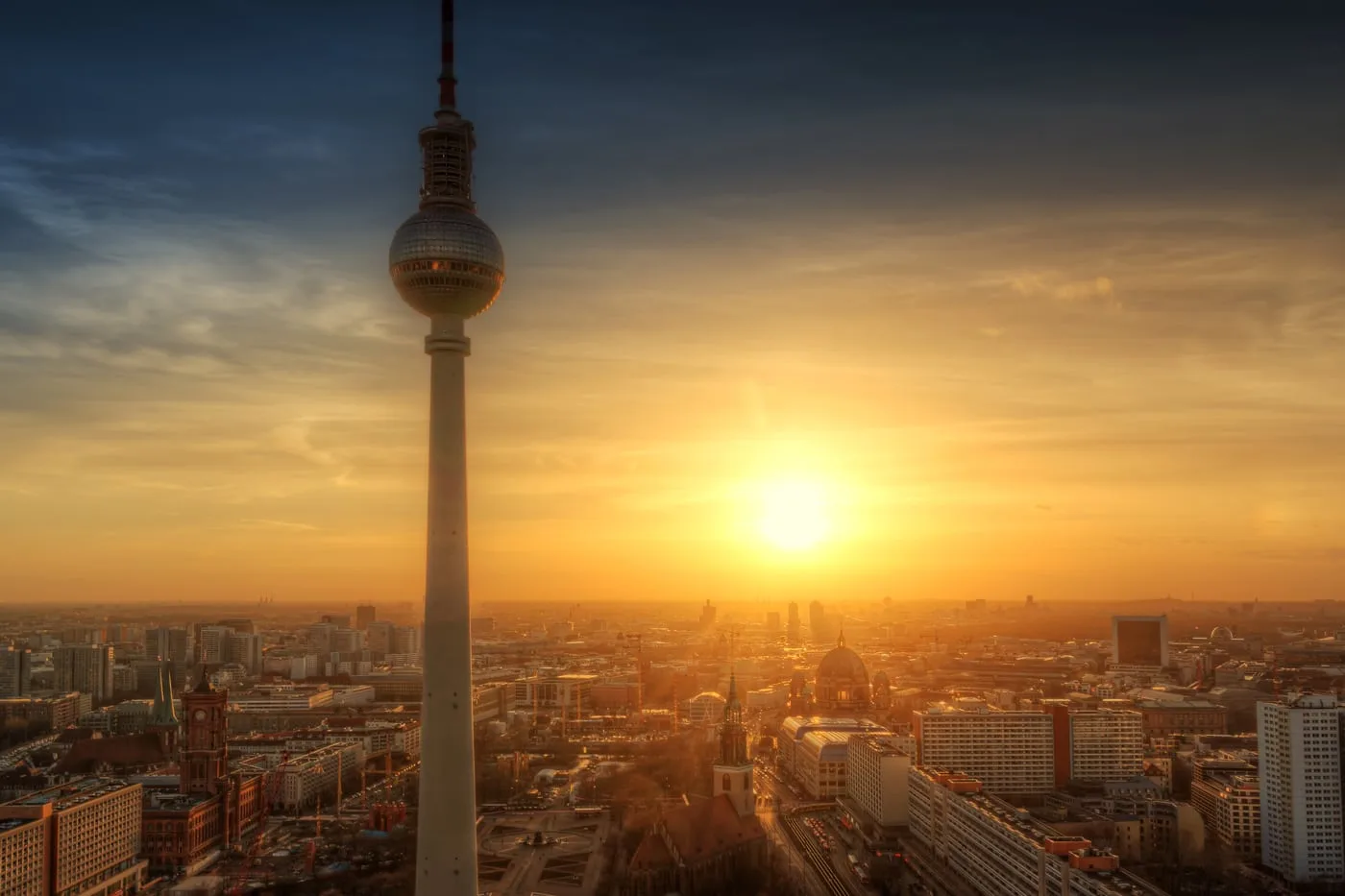
Berlín es enorme. Con 892 km², es nueve veces más grande que París. Intentar "verlo todo" en un fin de semana es una trampa que convierte el viaje en una carrera de museos. Este itinerario no pretende eso: te propone los lugares que de verdad merecen tu tiempo, ordenados de forma que tenga sentido geográfico y narrativo.
Guía oficial con más de 2.000 tours a mis espaldas, sé exactamente qué es imprescindible y qué puede esperar a una segunda visita.
Antes de empezar: cómo moverte
Berlín tiene uno de los mejores transportes públicos de Europa. Con el Deutschlandticket (49€/mes) o un ticket de zona AB, tienes acceso ilimitado a metro (U-Bahn), tren urbano (S-Bahn), tranvía y autobús. Para 3 días, compra un Berlin Welcome Card (72h): incluye transporte y descuentos en museos.
Para desplazamientos cortos en el centro, la bici compartida de Nextbike o Lidl-bike es perfecta. Berlín es absolutamente ciclable.
Mitte: historia, poder y memoria
Mañana: Puerta de Brandeburgo y Memoria del Holocausto
Empieza en la Puerta de Brandeburgo a primera hora, antes de que lleguen los grupos. Es el símbolo de Berlín: fue testigo del nazismo, la Guerra Fría, la caída del Muro y la reunificación. Dedícale 20 minutos y escucha lo que tiene que contar.
A 10 minutos a pie, el Memorial del Holocausto (Denkmal für die ermordeten Juden Europas) es uno de los monumentos más perturbadores y bellos del mundo. Son 2.711 estelas de hormigón que crean una sensación de desorientación calculada. Entra en el centro de documentación subterráneo: es gratuito y poderoso.
Mediodía: Checkpoint Charlie y Topografía del Terror
A 15 minutos caminando, Checkpoint Charlie es hoy muy turístico —y algo kitsch— pero sigue siendo un lugar cargado de historia. Es el antiguo paso fronterizo entre el sector americano y el soviético, escenario de varios de los episodios más tensos de la Guerra Fría. Vale la visita, pero sin altas expectativas estéticas.
A metros de allí, la Topografía del Terror es una de las exposiciones más importantes de Berlín. Construida sobre los cimientos de la Gestapo y las SS, documenta el terror nazi con rigor y sin eufemismos. Es gratuita y tiene un tramo de Muro en el exterior.
Tarde: Isla de los Museos
La Isla de los Museos (Museumsinsel) es Patrimonio de la Humanidad. Si tienes que elegir uno: el Pergamonmuseum (aunque está parcialmente en obras), o el Neues Museum, que alberga el busto original de Nefertiti. El Bode Museum es menos conocido pero con colas mucho menores.
Consejo de guía: el billete combinado para todos los museos de la isla cuesta unos 19€ y merece la pena si planeas entrar a dos o más.
El Muro, Prenzlauer Berg y Friedrichshain
Mañana: Memorial del Muro de Berlín (Bernauer Strasse)
El memorial de Bernauer Strasse es el lugar más completo para entender el Muro. Incluye tramos originales, la reconstrucción de la franja de la muerte, torres de vigilancia y un centro de documentación impresionante. Todo gratuito. Dedícale 90 minutos.
Después, camina hacia Prenzlauer Berg: uno de los barrios más bonitos de Berlín, con edificios de finales del siglo XIX perfectamente restaurados. Toma un café en alguna de sus muchas cafeterías independientes.
Tarde: East Side Gallery y Kreuzberg
La East Side Gallery es el tramo más largo conservado del Muro: 1,3 km pintados por artistas de todo el mundo en 1990. El mural más famoso es "El beso fraternal" entre Brezhnev y Honecker. Es al aire libre y gratuita.
Cruza el río Spree hacia Kreuzberg, el barrio más multicultural de Berlín. Cena en el Markthalle Neun (mercado de productores) o en cualquier döner kebab del barrio: Berlín tiene los mejores del mundo fuera de Turquía.
Excursión de día completo
Opción A: Potsdam (para historia y palacios)
Potsdam está a 40 minutos de Berlín en S-Bahn. El palacio de Sanssouci es el Versalles prusiano: un complejo de jardines y palacios que fue residencia de verano de Federico el Grande. El parque es enorme y gratuito; los palacios requieren entrada. Reserva online con antelación, especialmente en verano.
Opción B: Sachsenhausen (para historia del siglo XX)
El campo de concentración de Sachsenhausen está a 35 minutos en tren. Es un lugar de memoria que funciona como Memorial Nacional. Aunque es emocionalmente exigente, la visita es importante: este campo fue modelo para todos los demás. Con un guía en español, la experiencia gana mucho en profundidad y contexto.
Lo que puedes dejar para otra visita
- Schloss Charlottenburg — bonito, pero lejos del centro y con colas
- DDR Museum — entretenido pero superficial
- Fernsehturm (torre de TV) — las vistas están bien, las colas no
- Tiergarten completo — reserva tiempo si vas en primavera o verano
Dónde dormir
Para estar bien ubicado: los barrios de Mitte, Prenzlauer Berg o Friedrichshain son los más convenientes. Airbnb funciona bien en Berlín. Los hosteles de Berlín son de los mejores de Europa si viajas con presupuesto ajustado.
¿Vale la pena contratar un guía?
Para el primer día, sí. un free tour te orienta, te da el contexto histórico que necesitas para entender el resto del viaje y te ahorra horas de investigación. El contexto que aporta un guía local transforma completamente la experiencia de los lugares que luego visitas solo.
Berlin is enormous. At 892 km², it is nine times larger than Paris. Trying to "see everything" in a weekend is a trap that turns your trip into a museum marathon. This itinerary doesn't aim for that: it proposes the places that truly deserve your time, arranged so that they make geographic and narrative sense.
As an official guide with over 2,000 tours behind me, I know exactly what's essential and what can wait for a second visit.
Before you start: getting around
Berlin has one of the best public transport systems in Europe. With the Deutschlandticket (€49/month) or an AB zone ticket, you get unlimited access to the underground (U-Bahn), urban rail (S-Bahn), tram and bus. For 3 days, buy a Berlin Welcome Card (72h): it includes transport and museum discounts.
For short distances in the city centre, shared bikes from Nextbike or Lidl-bike are ideal. Berlin is a completely cyclable city.
Mitte: history, power and memory
Morning: Brandenburg Gate and Holocaust Memorial
Start at the Brandenburg Gate first thing in the morning, before the groups arrive. It is Berlin's symbol: a witness to Nazism, the Cold War, the fall of the Wall and reunification. Give it 20 minutes and listen to what it has to say.
Ten minutes on foot, the Holocaust Memorial (Denkmal für die ermordeten Juden Europas) is one of the most haunting and beautiful monuments in the world. 2,711 concrete stelae create a calculated sense of disorientation. Enter the underground documentation centre: it's free and powerful.
Midday: Checkpoint Charlie and Topography of Terror
A 15-minute walk away, Checkpoint Charlie is now very touristy — and somewhat kitsch — but it remains a place steeped in history. It was the crossing point between the American and Soviet sectors, the scene of some of the tensest episodes of the Cold War. Worth the visit, but with modest aesthetic expectations.
Metres away, the Topography of Terror is one of Berlin's most important exhibitions. Built on the foundations of the Gestapo and SS, it documents Nazi terror with rigour and without euphemism. It's free and has a stretch of Wall outside.
Afternoon: Museum Island
The Museum Island (Museumsinsel) is a UNESCO World Heritage Site. If you have to choose one: the Pergamon Museum (partially under renovation), or the Neues Museum, which houses the original bust of Nefertiti. The Bode Museum is less well-known but with far shorter queues.
Guide tip: the combined ticket for all island museums costs around €19 and is worth it if you plan to enter two or more.
The Wall, Prenzlauer Berg and Friedrichshain
Morning: Berlin Wall Memorial (Bernauer Strasse)
The Bernauer Strasse memorial is the most complete place to understand the Wall. It includes original sections, the reconstruction of the death strip, watchtowers and an impressive documentation centre. All free. Allow 90 minutes.
Then walk towards Prenzlauer Berg: one of Berlin's most beautiful neighbourhoods, with perfectly restored late-19th-century buildings. Stop for coffee at one of its many independent cafés.
Afternoon: East Side Gallery and Kreuzberg
The East Side Gallery is the longest preserved stretch of the Wall: 1.3 km painted by artists from around the world in 1990. The most famous mural is the "Fraternal Kiss" between Brezhnev and Honecker. It's outdoors and free.
Cross the Spree river into Kreuzberg, Berlin's most multicultural neighbourhood. Have dinner at Markthalle Neun (a producers' market) or at any döner kebab shop in the neighbourhood: Berlin has the best in the world outside of Turkey.
Full-day excursion
Option A: Potsdam (for history and palaces)
Potsdam is 40 minutes from Berlin by S-Bahn. The Sanssouci palace is Prussia's Versailles: a complex of gardens and palaces that was Frederick the Great's summer residence. The park is enormous and free; the palaces require a ticket. Book online in advance, especially in summer.
Option B: Sachsenhausen (for 20th-century history)
The Sachsenhausen concentration camp is 35 minutes away by train. It is a site of remembrance functioning as a National Memorial. Although emotionally demanding, the visit is important: this camp was the model for all others. With a guide, the experience gains considerably in depth and context.
What you can leave for another visit
- Schloss Charlottenburg — beautiful, but far from the centre and with long queues
- DDR Museum — entertaining but shallow
- Fernsehturm (TV tower) — the views are fine, the queues are not
- Full Tiergarten — save time for spring or summer
Where to stay
For a good central location: Mitte, Prenzlauer Berg or Friedrichshain are the most convenient neighbourhoods. Airbnb works well in Berlin. Berlin's hostels are among the best in Europe if you're travelling on a tight budget.
Is it worth hiring a guide?
For the first day, yes. A free tour orients you, gives you the historical context you need to understand the rest of the trip and saves you hours of research. The context a local guide provides completely transforms the experience of the places you later visit on your own.